April 15, 2026 4 min read
Why our niacinamide is 6%, and why we stopped there
Higher percentages sell bottles. Here is what the research was actually done at, and what happened when we tested our own.
By The Seravane formulation team

Walk down any skincare aisle and you will see niacinamide at 10%, at 15%, at 20%. The numbers have climbed every year, and the implication is obvious: more is better. Ours is 6%. People ask whether that makes it weaker. It is a fair question, and the answer says a lot about how we formulate.
What niacinamide is
Niacinamide is a form of vitamin B3. In skincare it is used for oil control, the look of enlarged pores, uneven tone and the marks left after blemishes. It is water-soluble, stable, and comfortable at a pH close to the skin's own, which makes it unusually easy to live with.
Where the evidence sits
Niacinamide is one of the better-studied cosmetic ingredients, and that is why we can be specific. The bulk of the published research was carried out at concentrations between about 2% and 5%. That is the range in which its effects on surface oil and on the appearance of tone were shown.
What the research does not show is a steady climb in results as the percentage rises. There is no body of evidence that 10% does twice what 5% does, or that 20% does four times as much. The big numbers on the shelf are not there because studies called for them.
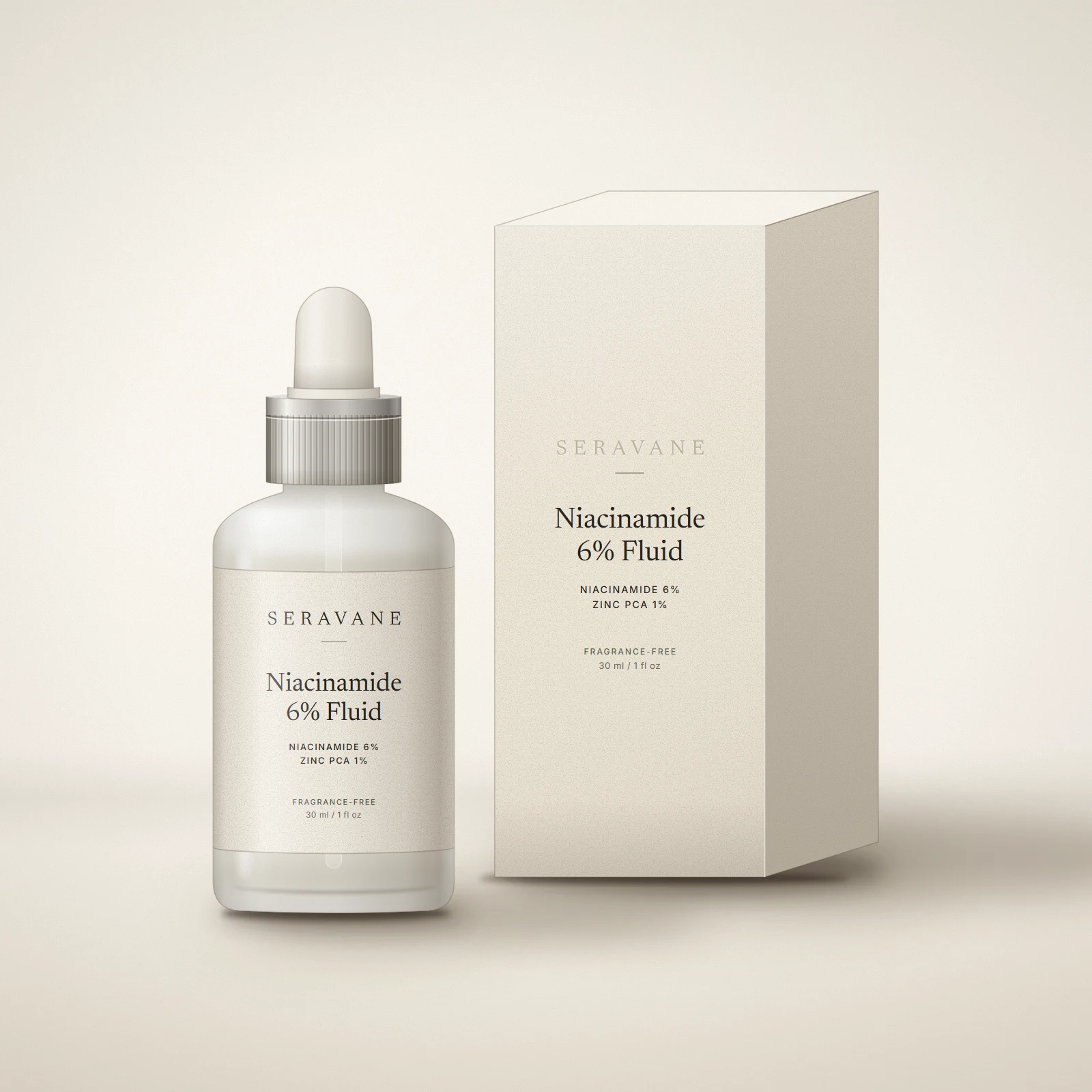
Higher percentages are marketing. We print that on the carton because we think you should know why the number is what it is.
What higher percentages do bring
They bring a higher chance of flushing. Some people find that strong niacinamide products leave their face red and warm for a while after application. It usually passes, but it is the most common complaint we hear from customers who come to us from a 10% product, and it is a poor trade for no demonstrated extra benefit.
Why 6% and not 5%
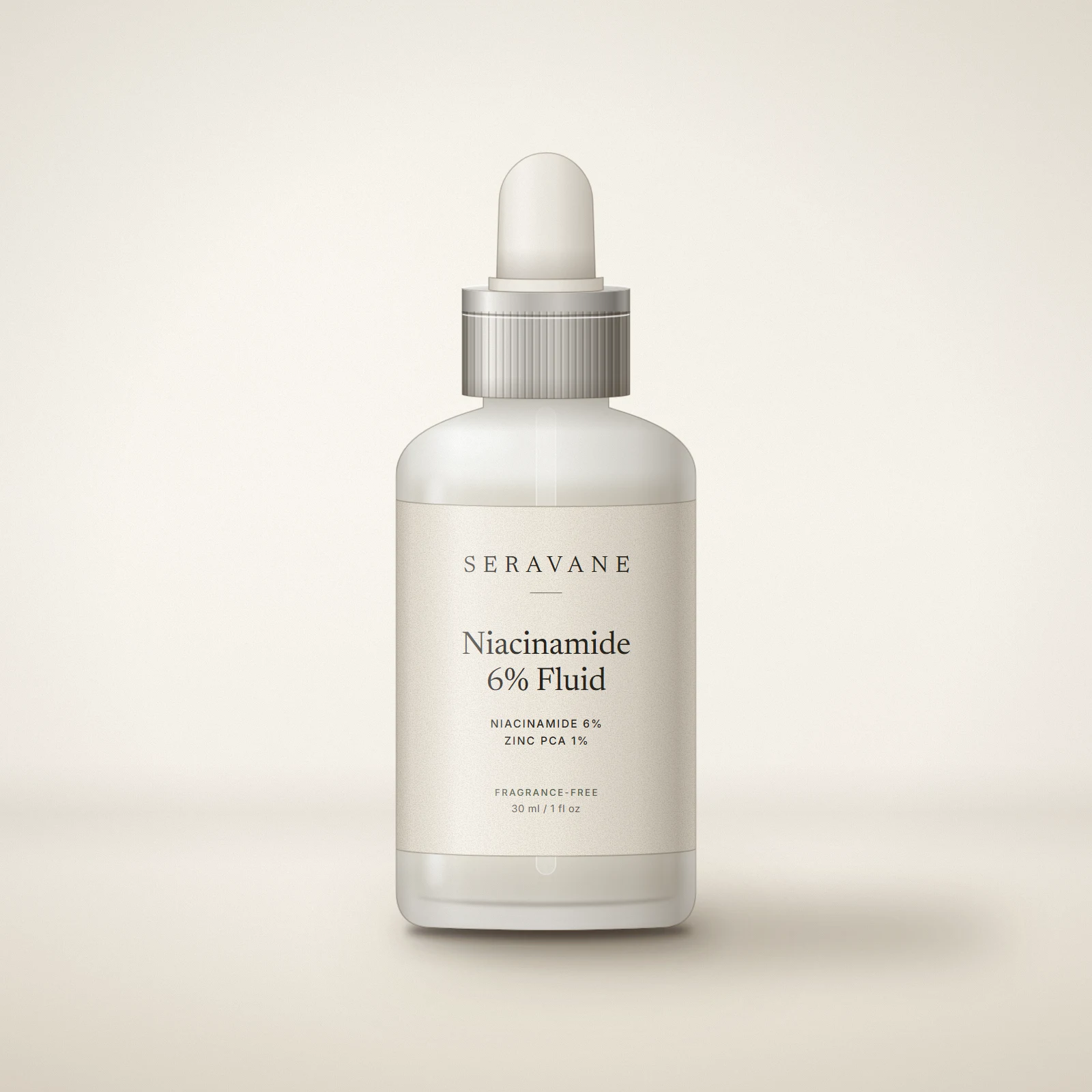
We settled just above the best-studied range, at 6%, for a practical reason: it left room in a watery fluid for 1% zinc PCA, which is there for oil control, without the texture turning tacky. The formula sits at pH 5.8 to 6.2. The rest of the list is glycerin, panthenol and what is needed to keep the fluid stable. It is short on purpose.
What happened when we tested it
We ran an eight-week instrumental study with 38 adults with oily or combination skin, using the fluid twice a day. Surface oil on the forehead, measured three hours after cleansing, was 19% lower on average at week eight than at the start. At week two the change was not significant.
Two things are worth saying plainly about that. It is our own study, with no placebo group, so it shows what happened while people used the product. And it took eight weeks. If you try a niacinamide for ten days and decide it does nothing, you have stopped before the part where it works.
How to use it
- Half a dropper after cleansing, morning or evening, or both.
- It layers with almost everything. It is safe with acids and retinoids on alternate steps.
- Patch test first if a stronger niacinamide has made you flush before. We cannot promise how your skin will react.
- Give it at least four weeks, and ideally eight, before you judge it.
The general point
A percentage is only useful if it is the right one. We would rather put a number on the bottle that we can explain than a bigger number that we cannot. That applies to the niacinamide, and it applies to everything else we dose.
-
Serum
Niacinamide 6% Fluid
Niacinamide at 6%, the percentage the evidence supports, with 1% zinc PCA
$42
-
- Low stock
- Subscribe & save
-
- Subscribe & save